 Download appDownload app
Video has become a major driver of monetisation for digital platforms - and it’s no longer confined to video-first environments. Whether it’s during a YouTube video, while scrolling through social media, or even when users are enjoying immersive audio series with visuals on-screen, video ads are now part of the broader content experience.
At Pocket FM, where millions of listeners engage deeply with long-form audio stories, video advertising is an important revenue stream that helps us sustain and grow our content ecosystem. By leveraging the right ad formats, we create opportunities for brands to connect with our audience without compromising on user experience. Among these formats, two of the most impactful for our platform are In-stream and Out-stream video ads.
In this guide, we’ll break down the difference between the two formats, share best practices, and include real-world case studies - including how Pocket FM uses both to deliver value for advertisers without disrupting the listener experience.
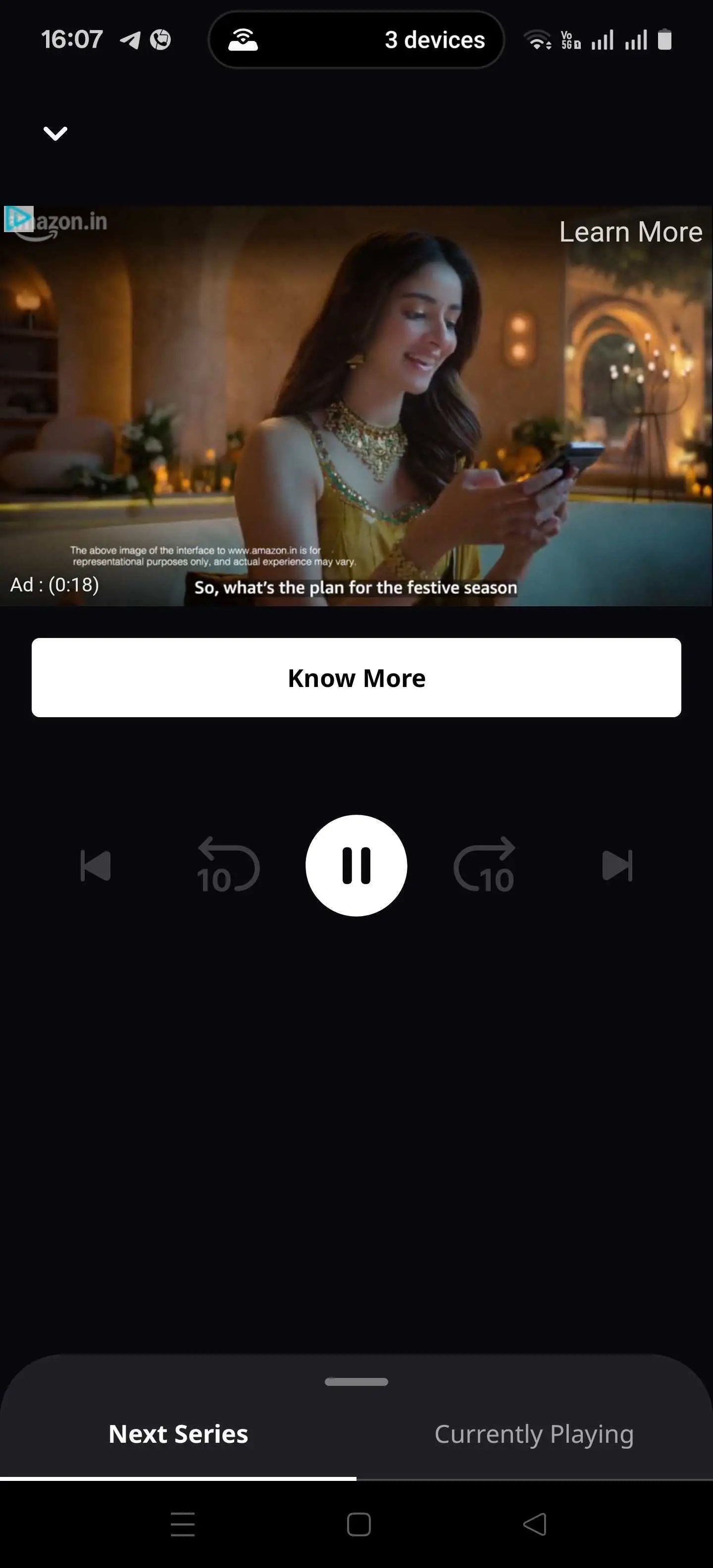
In-stream ads are short and, snappy advertisements placed directly within content. Much like TV commercials interrupt your favourite shows, these ads appear before, during, or after the content a user has chosen to watch or listen to.
You’ll see in-stream ads across platforms like:
Audio and video streaming platforms like Pocket FM
YouTube pre-rolls and mid-rolls
Facebook Watch
OTT (Over-The-Top) streaming services
Because the audience is already in a “content consumption” mindset, in-stream ads often enjoy higher attention and completion rates.
In-stream ads come in three main categories:
These fully disrupt the video and take over the screen. They’re called linear because they play sequentially with content - just like a TV ad break.
Pre-roll: Ads shown before the video starts, usually 15–60 seconds. Perfect for driving brand awareness.
Mid-roll: Ads inserted mid-video. Because viewers are already invested, mid-rolls often have high completion rates.
Post-roll: Ads shown after the video ends. Less common but can be effective for driving clicks.
These ads don’t stop playback. Instead, they appear over the video without interrupting:
Overlay Bbanner: A small ad along the bottom or top of the video.
Overlay Ttext: Subtle text with additional information.
Branded Ccanvas: An L-shaped unit that briefly shrinks the video to display your brand, similar to CTV experiences.
These appear next to the video player — like a banner or rich media creative. They don’t interrupt viewing but reinforce your brand and counter “banner blindness.”
Readiness to Engage: Viewers are already in video mode, making them more likely to watch.
High Compatibility: In-stream ads work seamlessly in OTT (Over-the-Top) and CTV (Connected TV) environments.
Motivated Viewers: Non-skippable formats mean users are more likely to finish watching to return to their content.
Strong Attention: Momentary interruption helps cut through noise.
Costly: In-stream ads are among the costliest ad formats, but depending on targeting, they can still deliver strong value - especially when measured on a cost-per-completed-view basis. Make it higher revenue source
Customisable: Publishers decide whether ads are skippable and how long they run.
Intrusive: Interrupting content can frustrate viewers if overused.
Technical Requirements: Requires compatible video players.
Limited Placement: Some platforms don’t support in-stream formats.
Higher CPM: You’ll typically pay more per thousand impressions than display ads.
Relevance Matters: Ads must match the content’s tone or risk losing attention.
Make a Fast Impact: Hook viewers in the first 3–5 seconds with bold visuals or an engaging message.
Focus on the Viewer: Use words like you and so you can to create a personal connection.
Brand Consistently: Show your logo early and use distinctive colors or sounds.
Clear CTAs: Be specific: Shop Now, Learn More, or Download Today.
Use Captions: Many users watch with sound off.
Create Intimacy: Close-ups and eye contact feel more like a conversation than an ad.
Out-stream video advertising allows brands to place video ads outside traditional video players, embedded within:
Articles
Social feeds
Mobile apps
This means you don’t need a video hosting environment — your ad can autoplay within text or image-based content, appearing naturally as users scroll.
For example, you may see an out-stream ad:
Video Banners in Pocket FM
As you scroll through Facebook or Instagram
In a banner slot on a webpage
In-article Ads — Displayed between paragraphs of text
In-feed Ads — Embedded in social media feeds
In-banner Ads — Video inside display banners
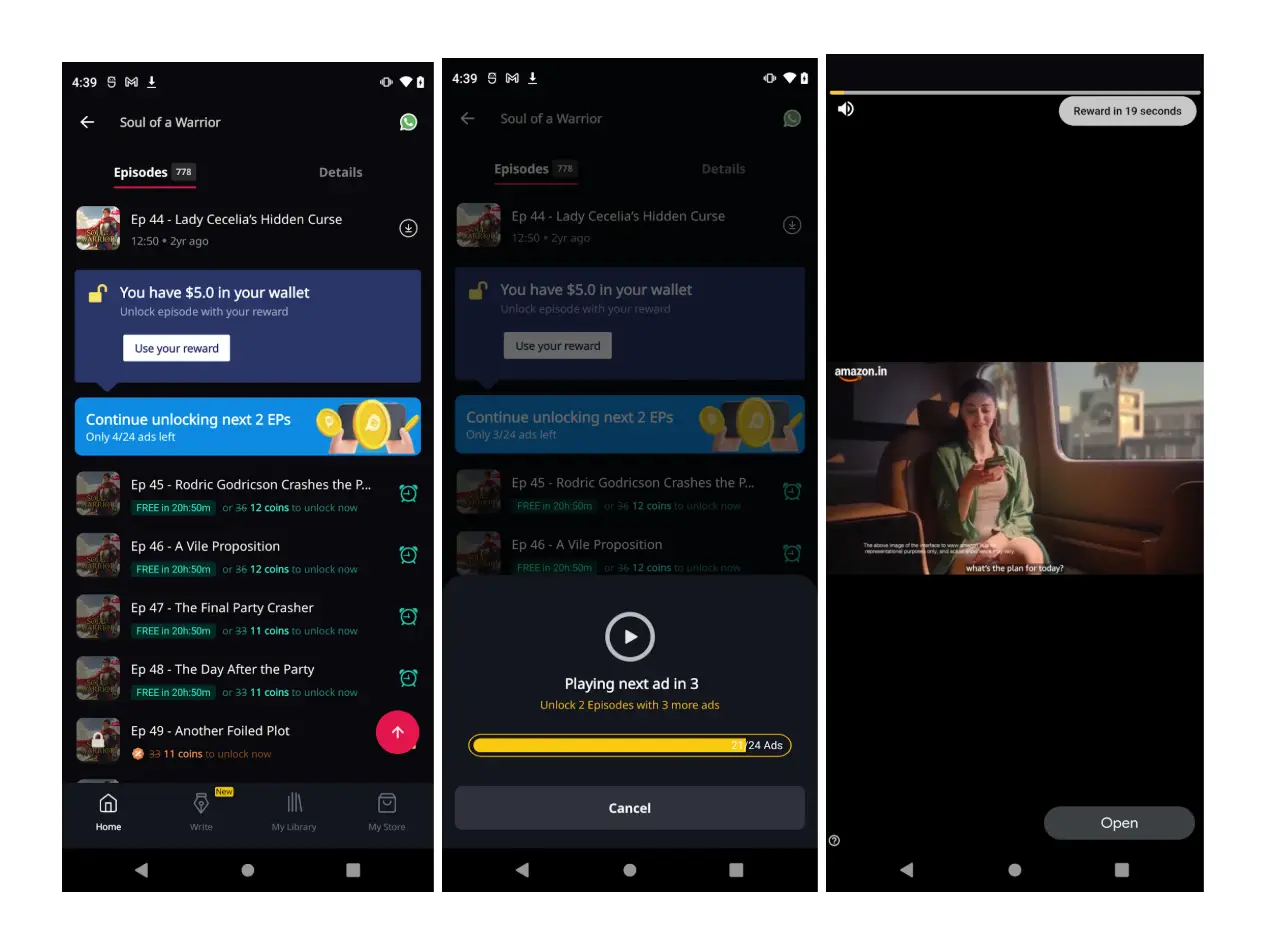
Rewarded Video Ads / Interstitial Video Ads — Full-screen ads during app transitions (e.g., To unlock Episodes)
Out-stream ads are designed to run in:
News websites
Blogs
Social media feeds (Facebook, Instagram)
Mobile apps
Expanded Reach: No video content required — ads can run almost anywhere.
Increased Brand Awareness: Your brand shows up in unexpected but relevant places.
Flexibility: Easy to integrate without specialised players.
Less Intrusive: Users can scroll past if uninterested.
Robust Targeting: Demographics, interests, location, and behaviour — all accessible.
Transparent Measurement: View-ability, engagement, and completion tracking ensure performance clarity.
Requires Experience: Running out-stream campaigns can be tricky without expert support.
Potentially Lower Visibility: Easier for users to scroll past or ignore.
Ad Blocking: Some viewers may never see the ad.
Placement Risks: Bad placements can result in accidental clicks or frustration.
At Pocket FM, our in-stream ads appear during the playback of audio episodes in a way that balances advertiser visibility with listener comfort.
Ads are typically 15 seconds or longer, with a skip option after 5 seconds.
First-session placement: When a user opens the app and plays an episode for the first time in that session, they see an ad.
If a user opens the app multiple times a day (e.g., 5 times), they see an ad each time the app opens.
Ad Interval: Additional ads appear every 30 minutes from the last impression.
Extra Monetization Feature - Ad Podding: We can serve two or three ads back-to-back in a single break, giving brands more exposure and optimizing revenue without increasing the number of interruptions.
💰 Revenue Impact: In-stream ads contribute meaningfully to Pocket FM’s ad revenue, serving as a premium engagement format for targeted brand campaigns.
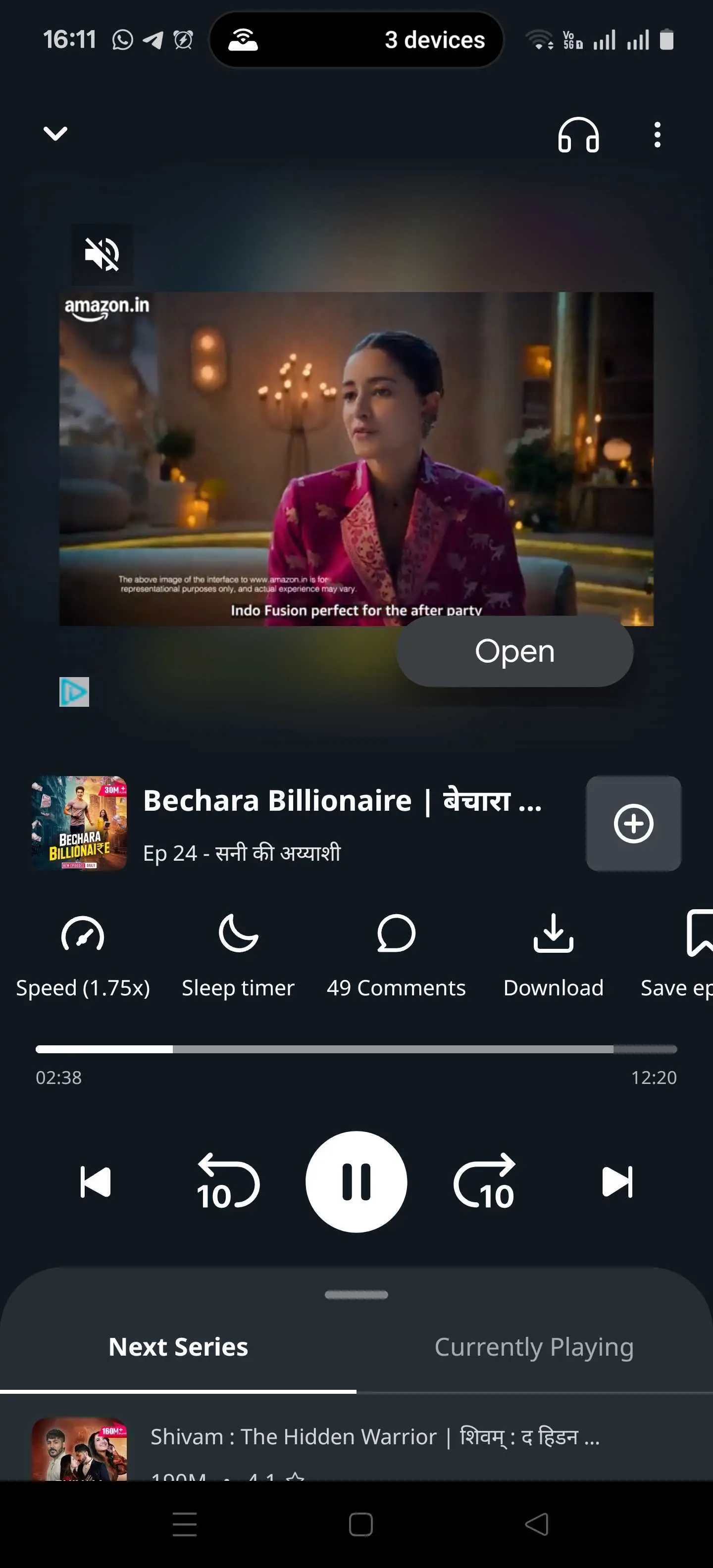
While users listen to their favourite stories, Pocket FM displays muted out-stream video banners on the now-playing screen.
These do not interrupt audio playback but remain visible to the listener.
Because the videos run muted, they integrate seamlessly into the listening experience while still catching the eye.
This format has proven to be a high-revenue driver without negatively impacting user engagement.
💰 Revenue Impact: Banner ads (including these video formats) contribute significantly to Pocket FM’s ad revenue, making them a major monetization channel.
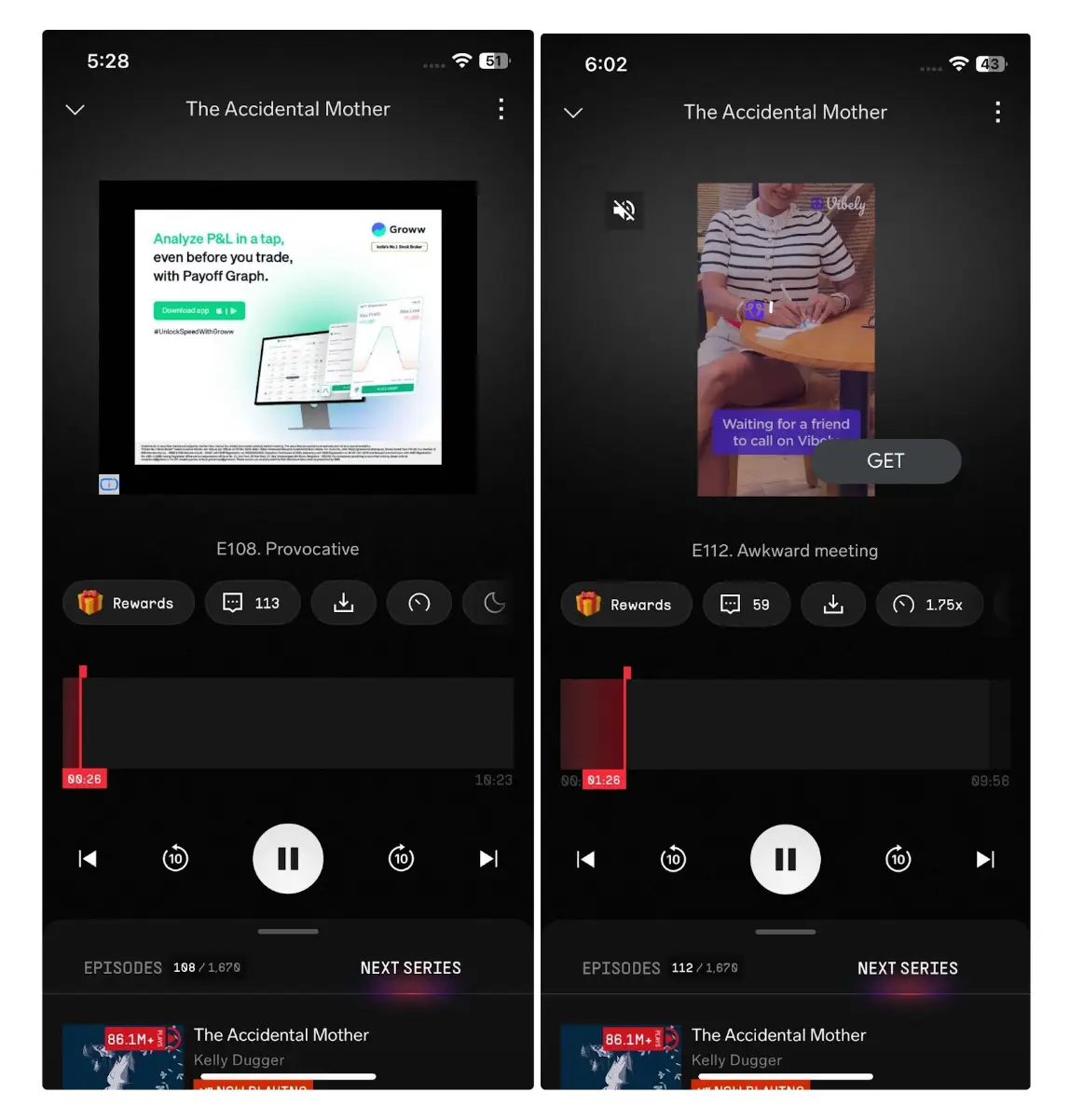
Rewarded video ads are full-screen, out-stream ads that play only when a listener clicks on a Rewarded Video (RV) nudge.
Once clicked, a full-page ad loads and plays on the user’s screen, and upon completion, the listener receives the promised reward - such as Pocket Coins (for watching a single ad) or Unlocking an episode (by watching a set number of ads).
Because these ads are user-initiated and tied to tangible rewards, engagement and completion rates are consistently high.
💰 Revenue Impact: Rewarded video ads are one of Pocket FM’s largest revenue contributors, delivering strong returns without disrupting the core listening experience.
Grammarly utilized TrueView skippable in-stream ads on YouTube - ads that can be skipped after five seconds - targeting students, professionals, and non-native English speakers. The campaign delivered:
A notable increase in user sign-ups.
Improved brand awareness.
Efficient ad spend through high-intent audience targeting.
Insider Inc., the publisher behind Business Insider, used out-stream video placements within its articles to significantly boost user engagement metrics. By leveraging JW Player’s “Article Matching” and “Recommendations” features, Insider saw impressive results:
+61% increase in click-through rate (CTR)
+114% lift in completed video views
+97% jump in ad impressions compared to their previous in-article video implementation
In-Stream Ads are ideal if you:
Want higher engagement and completion rates
Are targeting audiences on video platforms
Have creative assets designed to play before or during video content
Out-Stream Ads are better if you:
Want to extend your video campaigns beyond video platforms
Need flexible placements across articles, blogs, and feeds
Focus on broad brand awareness
At Pocket FM, we’ve seen how in-stream ads can deliver premium brand impact during immersive audio experiences, while out-stream ads extend reach and create new monetization streams without breaking the flow of content.
Which one is right for you? Ultimately, your choice comes down to audience, goals, and creative assets:
Want high impact and premium placement? In-stream is your best bet.
Need broad reach across diverse content? Out-stream can deliver.
No matter what which you choose, pairing strong creative with thoughtful targeting will help you stand out and drive results.